This post contains affiliate links. If you click and make a purchase, I may receive a small commission at no extra cost to you. Thank you for supporting the site!
YNAB vs. Quicken comparison: features, pricing & performance. Find the best personal finance tracking tool for your budget and financial goals in 2025.
Choosing the right budgeting software can mean the difference between finally getting ahead financially or spinning your wheels for another year. YNAB and Quicken stand out as two of the most popular personal finance tracking tools on the market, but they take completely different approaches to managing your money.
You’ll save yourself time, money, and frustration by picking the right tool from the start.
Overview
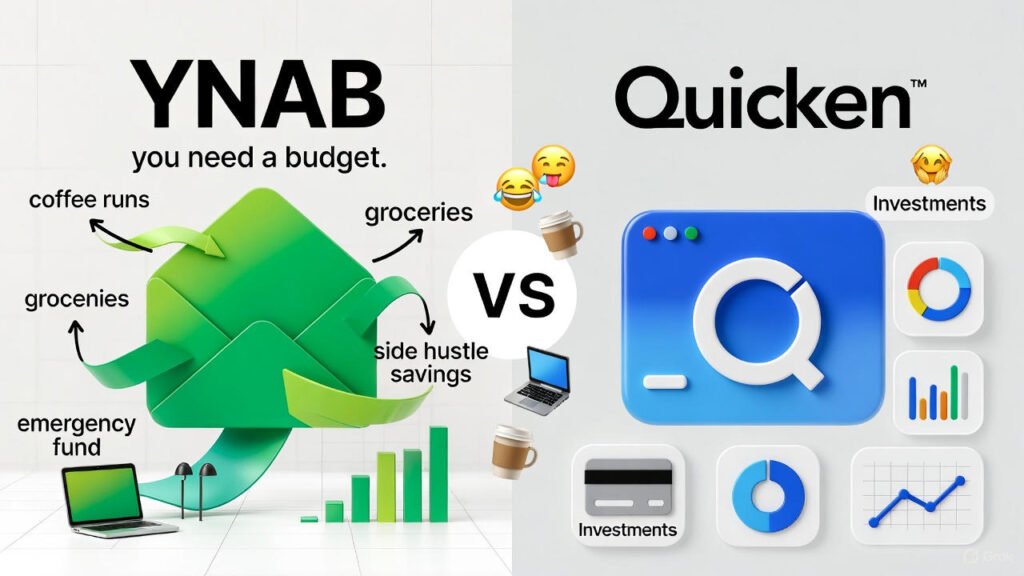
YNAB (You Need A Budget) built its entire platform around a behavioral framework called the four-rule system. You assign every dollar a job before you spend it.
You embrace your true expenses by planning for irregular costs.
You roll with the punches when life throws you curveballs. You age your money so you’re spending last month’s income instead of living paycheck to paycheck.
The system forces you to think about money differently. You can’t just passively track transactions and hope things work out.
Quicken takes a comprehensive approach. The platform captures every financial detail across your entire life.
You get deep investment tracking, net worth monitoring, tax reports, and extensive reporting capabilities.
Quicken shows you where your money is and where it’s been.
When you’re comparing personal finance tracking tools, this fundamental difference matters more than any person feature. YNAB changes how you behave with money.
Quicken documents what you’re already doing.
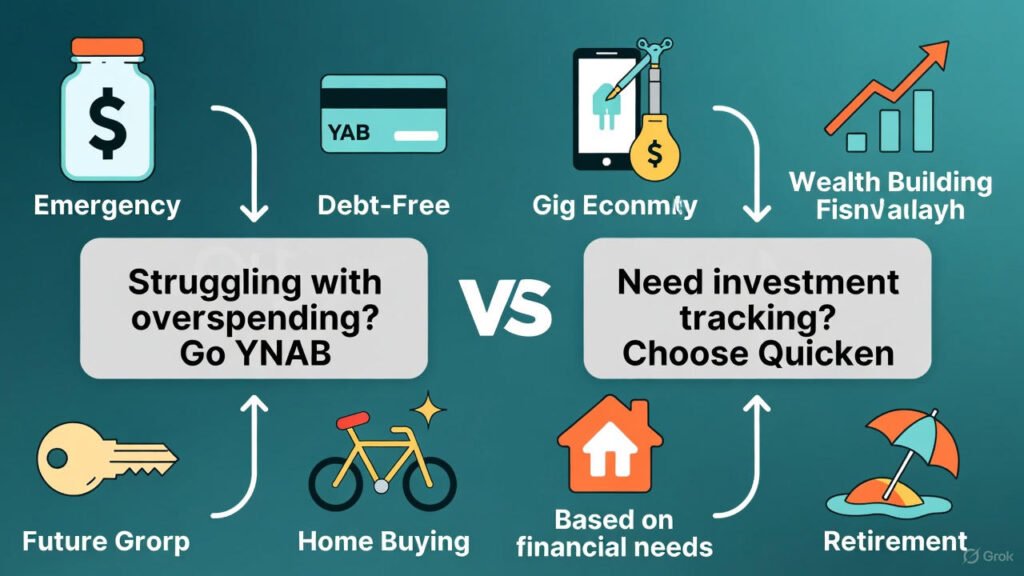
You pick YNAB when you need to establish better financial habits. You pick Quicken when you want finish visibility across complex finances.
Feature Comparison
The features each platform offers will directly impact your daily experience with managing money.
Budgeting and Expense Tracking
YNAB makes you assign every transaction to a budget category. The app won’t let you overspend without consciously moving money from another category.
This friction is intentional.
The system creates accountability through structure.
When you overspend in dining out, you see exactly which category you’re stealing from to cover it. Maybe it’s your vacation fund.
Maybe it’s groceries for next week.
The visibility creates natural consequences before you’re overdrawn.
Quicken uses traditional budgeting. You set spending limits for different categories.
The system tracks whether you’re over or under budget.
You get alerts when you’re approaching limits. The approach gives you flexibility without enforcing strict accountability.
If you’re managing irregular income as a freelancer or gig worker, YNABs system adapts better. You’re not locked into fixed monthly budgets based on average income.
You budget the actual money you have right now.
Investment and Wealth Tracking
Quicken dominates this category completely. The investment tracking capabilities exceed what most consumer apps even attempt.
You get portfolio analysis across all your accounts. Cost basis tracking helps you understand tax implications.
Performance comparisons show how you’re doing against market benchmarks.
The Morningstar Portfolio X-ray tool (included in Premier tier) provides institutional-level analysis.
YNAB doesn’t really track investments beyond the cash you move into investment accounts. Once money enters your brokerage account, YNAB stops providing useful information.
If you have a meaningful portfolio, you’ll need additional tools.
Data Organization and Reporting
Quicken generates customizable reports on virtually any financial metric you track. You can analyze spending patterns over months or years.
Net worth tracking shows your progress.
Tax-ready reports simplify filing. Business profit/loss statements come with higher tiers.
The reporting depth matches what many financial advisors use with clients.
YNABs reporting stays functional but basic. You see spending summaries and trend data.
The platform doesn’t offer sophisticated analysis tools.
The philosophy holds that detailed reporting doesn’t change behavior. Intentional budgeting does.
Bill and Debt Management
Quicken combines bill tracking directly into the platform. Higher subscription tiers include Bill Pay functionality.
You can schedule and process payments without leaving the app. Debt management tools visualize payoff timelines and help you strategize.
YNAB treats bills like any other spending category. You assign money to them in your budget.
You track them.
But you’re responsible for actually paying bills through your bank or the biller’s website.
The system doesn’t combine with billers or process payments.

Performance Analysis
Performance means reliability, user experience, and whether the system actually produces results in your financial life.
Reliability and Bank Syncing
Both platforms sync with thousands of financial institutions. Real-world experience shows some differences though.
YNAB generally has more reliable syncing because the system handles fewer data points. The platform focuses exclusively on transactions and account balances.
This simplicity creates fewer opportunities for technical problems.
Quicken users occasionally report syncing delays, particularly with smaller banks or complex account structures. The platform pulls significantly more data, including investment holdings, prices, and detailed transaction information.
More data means more potential failure points.
You’ll want to check whether your specific institutions work well with either platform before committing.
User Experience and Learning Curve
YNAB needs learning its methodology. You can’t just install the app and figure it out through exploration.
The platform offers structured education through workshops, video tutorials, and documentation.
An active community helps new users understand the concepts.
Once you grasp the four-rule system, the interface feels intuitive. Everything follows the same logic.
Quickens interface is dense with options. The platform offers tremendous power, but accessing that power needs navigating menus filled with features.
Beginners often feel overwhelmed by the sheer number of options.
If you’re comfortable with complex software, Quicken becomes more valuable over time as you learn its capabilities. If you want something simple to start using immediately, you’ll struggle with the learning curve.
Behavioral Outcomes
YNAB has proven itself at changing how people interact with money. The methodology works because you see spending consequences immediately.
You can’t avoid noticing that you just reallocated your grocery money to dining out because you made that choice actively.
Users regularly report that YNAB helped them break paycheck-to-paycheck cycles, build emergency funds, and pay off debt faster.
Quicken documents your behavior without pushing you toward change. If you naturally adjust spending when you see the data, this works fine.
If you need a system that enforces adjustment, Quicken won’t provide that pressure.
Price Comparison
| Platform | Plan | Monthly Cost | Annual Cost | Key Features |
| YNAB | Single Tier | $14.99 (or $9.08 if paid annually) | $109 | Full budgeting, goal tracking, bank sync, education |
| Quicken Simplifi | Starter | $2.99 | $36 | Basic budgeting, spending tracking, cash flow projections |
| Quicken Classic Deluxe | Mid-Tier | $5.99-$6.49 | $72-$78 | Investment tracking, debt management, detailed reporting |
| Quicken Classic Premier | Premium | $7.99 | $96 | Advanced portfolio tools, Morningstar analysis, tax planning |
YNAB charges a flat $109 annually. You can pay monthly at $14.99 if you need flexibility, but you’ll spend $180 over the year.
There’s no free tier.
The pricing doesn’t scale with features. You get the full platform regardless of how you pay.
Quicken Simplifi offers exceptional value at $2.99 monthly ($36 annually). You get automated spending categorization, cash flow projections, and basic investment tracking.
This plan works well if you just want simple budgeting without complexity.
Quicken Classic Deluxe adds investment tools and reporting at $5.99-$6.49 monthly when paid annually. Quicken Classic Premier includes Morningstar analysis and advanced portfolio tools at $7.99 monthly (billed annually at $96).
Quickens entry point costs less than one month of YNAB. When you’re evaluating personal finance tracking tools based on price alone, Quicken looks significantly cheaper.
The calculation shifts when you factor in what you actually need. If you want behavioral budgeting with educational support, YNAB provides that in its single tier. If you want investment tracking that rivals paid portfolio management tools, Quicken Premier costs less than YNAB while offering more financial visibility.
Best For Different Users
Your specific situation decides which platform makes sense.
If You’re Establishing Financial Independence
You’re earning decent money but somehow never getting ahead. Your checking account hits zero before payday.
You want to build an emergency fund but keep having emergencies that drain any progress.
YNAB addresses these exact problems through its behavioral framework. The four-rule system teaches you to spend less than you earn while building toward goals.
The community support creates accountability.
The educational resources explain concepts that school never taught you.
The methodology works because you’re forced to make conscious decisions about every dollar. When you run out of money in a category, you see exactly what you’re sacrificing to overspend.
Start building better habits: Try YNAB free for 34 days, no credit card required
If You’re Managing Shared Family Finances
You’re tracking joint accounts, multiple income sources, kids’ expenses, and shared goals. You need visibility into where money goes and why.
Your partner needs to understand the financial picture without becoming a spreadsheet expert.
YNABs approach forces transparent conversations about money allocation. When you’re both assigning dollars to categories, you’re both involved in financial decisions.
The app shows exactly what you can afford because you’ve already allocated existing money.
Quicken works for families who are past behavioral challenges and need comprehensive tracking. If one partner manages investments and wants portfolio analysis alongside family budgeting, Quickens all-in-one approach makes sense.
If You’re Managing Irregular Income
Your paycheck varies every month. You might earn $3,000 one month and $7,000 the next.
Traditional budgeting feels impossible because you can’t forecast income.
YNABs system handles this situation well. You budget based on money you’ve actually received, instead of forecasting average income.
When a big check arrives, you assign those dollars to upcoming expenses and goals.
When income is light, you see exactly what you can afford.
Quicken offers value for freelancers running actual businesses. If you’re invoicing clients, tracking business expenses separately, and managing quarterly tax payments, Quickens Business & Personal tier provides accounting features.
You get profit/loss statements, mileage tracking, and business reporting.
For most freelancers without employees or significant business complexity, YNAB handles the core budgeting need better.
If You’re Focused on Investments
You have meaningful investment portfolios across multiple accounts. You want to track performance, understand asset allocation, and make informed decisions about buying and selling.
You need tax reporting for cost basis and capital gains.
Quicken becomes essential financial infrastructure here. The investment tracking capabilities you’d pay for separately come built into Quicken Premier and higher tiers.
Portfolio analysis tools rival what professional financial advisors use.
YNAB can’t help you with investments beyond tracking the cash you contribute.
Get comprehensive investment tracking: Check current Quicken Premier pricing and features
If You’re Paying Off Debt
You’re carrying student loans, credit card balances, or other debt. You want to pay it off faster while building savings.
Every dollar counts.
YNABs behavioral approach helps you find money you didn’t know you had. The system shows exactly where your money goes currently.
You identify spending that doesn’t serve your goals.
You reallocate those dollars to debt payoff.
The debt payoff features in both platforms are similar. Both track balances and show progress.
The difference is that YNAB helps you change spending behavior to find extra money for payments.
Final Recommendation
YNAB wins for behavioral change. If you struggle with spending less than you earn, building emergency funds, or breaking the paycheck-to-paycheck cycle, YNAB provides the structure you need. The methodology works through accountability and visibility.
You see spending consequences before they become financial disasters.
The limitation is focus. YNAB does budgeting and does it well.
It doesn’t handle investments, business accounting, or complex financial reporting.
Quicken wins for financial complexity. Multiple investment accounts, real estate holdings, tax planning needs, or business finances push Quicken from optional to essential.
The investment tracking and reporting justify the cost for anyone with a meaningful portfolio.
The limitation is behavioral change. Quicken shows you what happened. It doesn’t push you toward better financial decisions.
Most people benefit more from changing their financial behavior than from tracking complex investments. You build wealth through consistent saving and controlled spending.
Data analysis helps you preserve and grow wealth you’ve already built.
If you haven’t established spending discipline yet, tracking investments with detailed reports misses the point. Fix your cash flow first.
Build the emergency fund.
Stop living paycheck to paycheck. Then worry about optimizing investment allocation.
Both platforms let you start risk-free. YNAB offers a 34-day free trial.
Quicken includes a 30-day money-back guarantee on annual purchases.
Your actual pain point decides the right choice. If you don’t know where to allocate money or how to stop overspending, YNAB solves that problem.
If you don’t know whether your money is working efficiently across accounts and investments, Quicken provides those answers.
When you’re comparing personal finance tracking tools, start with your biggest financial challenge today, as opposed to choosing based on impressive feature lists.
For behavioral budgeting: Start your free 34-day YNAB trial
For comprehensive financial tracking: Explore Quicken plans with current discounts
You’ll probably need both eventually. Behavioral change comes first.
You can’t improve investments you haven’t built yet.
Get your spending under control, build your savings, then graduate to comprehensive financial tracking as your situation grows more complex.
The best personal finance tracking tools are the ones you’ll actually use consistently. Pick based on which problem is costing you money right now.